Red Cat Holdings: Rethinking How Unmanned Systems are Designed
The battlefield no longer announces itself with clear lines or predictable moves. It unfolds in fragments—across cities, borders, and invisible digital layers—where decisions are made in seconds and hesitation can cost everything. In this new reality, the advantage doesn’t belong to the largest force, but to the fastest, the smartest, and the most connected. A decade ago, drones were seen as tools—useful but limited. Today, they are central to how missions are planned and executed. Yet, as their role has expanded, so have the expectations. It is no longer enough for a drone to simply fly. It must launch instantly, navigate without GPS, withstand hostile conditions, and integrate seamlessly with a network of systems already in motion. And this is where many conventional platforms fall short built for capability, but not for the complexity of real-world operations. This growing gap between what exists and what is needed has reshaped the conversation around unmanned systems. The question is no longer, “Do we have drones?” but rather, “Do we have systems that can think, adapt, and operate together when it matters most?” Red Cat was built to answer that question. Founded in 2016 and headquartered in Salt Lake City, Utah, Red Cat Holdings did not set out to build just another drone company. It set out to rethink the entire approach. From the beginning, the company recognized that the future of defense would not be defined by standalone platforms, but by connected ecosystems—autonomous systems that communicate, coordinate, and function as a unified force. That belief has shaped its journey into a provider of advanced unmanned solutions for defense, government, and public safety, where every second counts and reliability are non-negotiable.
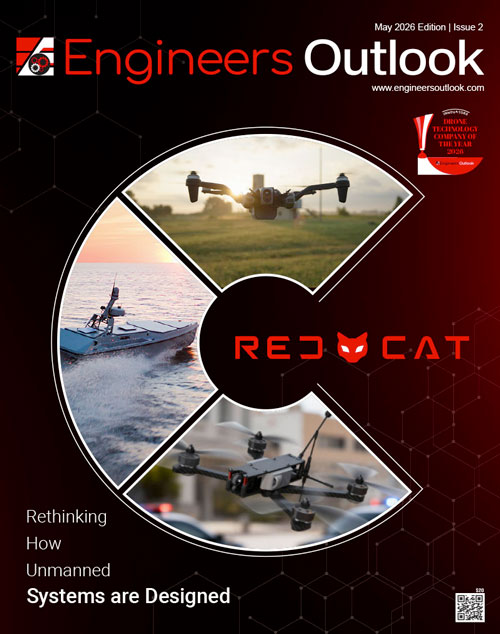
In a nutshell, Red Cat delivers mission-ready solutions across all domains in defense and security. Together, their integrated technologies give forces decisive capabilities in the air, on land, and at sea—meeting the demands of modern conflict with a unified approach. By advancing interoperability across domains, Red Cat ensures operators are equipped to outpace evolving threats.
Rugged and Portable Systems Red Cat’s design philosophy begins with the fact that its drones are engineered to be compact enough to fit into a backpack and simple enough for a single operator to deploy quickly, ensuring that critical intelligence can be gathered without delay. This focus on usability reflects a deep understanding of how these systems are actually used in the field. At the same time, no two missions are identical. Some require detailed surveillance, others demand mapping, inspection, or precision operations. Red Cat addresses this through a modular design approach that allows operators to configure drones with different payloads, sensors, and software depending on their specific needs. This adaptability ensures that systems remain relevant even as mission requirements evolve. As Jeff Thompson, CEO & Chairman of Red Cat Holdings explains, “our goal is to develop specialized systems that can operate together as part of a coordinated architecture,” reinforcing its commitment to interoperability and mission flexibility. “The future of unmanned systems is not about a single drone outperforming another platform. It is about how multiple autonomous systems work together to support a mission,” Thompson says. This belief forms the foundation of the company’s “Family of Systems” approach—an architecture where multiple specialized platforms operate in coordination to deliver greater impact.
Among its flagship solutions, the Black Widow™ platform stands out as a testament to this philosophy. Selected for the U.S. Army’s Short Range Reconnaissance program, it provides small units with a rugged, portable system capable of delivering real-time intelligence at the tactical edge. Designed for rapid deployment, it enables soldiers to assess terrain and threats before advancing, significantly reducing risk and improving decision-making. Complementing this is the FANG™ FPV platform, which introduces a low-cost, attainable capability optimized for precision strike and sensor-to-shooter missions. Together, these systems reflect a broader trend in modern warfare—integrating reconnaissance with action in a seamless operational flow. Red Cat has also extended its capabilities beyond aerial platforms, developing unmanned surface vessels (USVs) that enhance situational awareness in maritime and coastal environments. This expansion into multiple domains highlights Red Cat’s ambition to build a fully integrated autonomous ecosystem. “We are focused on creating an ecosystem where air and maritime systems can operate together, delivering real-time intelligence and mission support,” Thompson notes, underscoring its multi-domain vision.
Security and Compliance at its Core Compliance and security also play a crucial role, particularly in defense and government applications. Red Cat designs and manufactures its systems in the United States, aligning with strict requirements such as NDAA compliance and the Department of Defense’s Blue UAS program. These standards ensure that the platforms meet rigorous cybersecurity, supply chain, and operational benchmarks, giving customers confidence in their deployment. The company’s manufacturing processes reflect the same commitment to quality. Through its subsidiary, Teal Drones, Red Cat has achieved AS9100 certification—a globally recognized standard in aerospace and defense manufacturing. This certification underscores the level of precision and discipline required to deliver systems that can be trusted in mission-critical scenarios. Behind these technological capabilities lies a team shaped by real-world experience. Many members come from military, engineering, and operational backgrounds, bringing firsthand knowledge of the challenges faced by war fighters, first responders, and security professionals. This experience ensures that innovation is grounded in practicality rather than abstraction.
A Strategy of Innovation and Perfection Growth at Red Cat is driven by a thoughtful strategy of combining complementary technologies and teams. Through acquisitions, the company has built a diverse portfolio while maintaining flexibility within its organizational structure. Rather than imposing rigid centralization, it allows individual teams to retain their strengths and expertise while contributing to a unified vision. A compelling example of this approach is the development of the Black Widow™ platform. Over several years, Red Cat worked closely with the U.S. Army to refine the system, incorporating feedback from real-world operations. This iterative process led to a solution that not only meets technical requirements but also addresses the practical challenges faced by soldiers in the field. Today, the company continues to monitor key trends shaping the industry. Advances in artificial intelligence and autonomy are transforming how drones navigate and process data, while increasing emphasis on secure supply chains is influencing manufacturing decisions. Thompson concludes, “Red Cat is actively aligning its strategy with these developments, ensuring its platforms remain relevant and effective in an evolving landscape.”
Red Cat Holdings
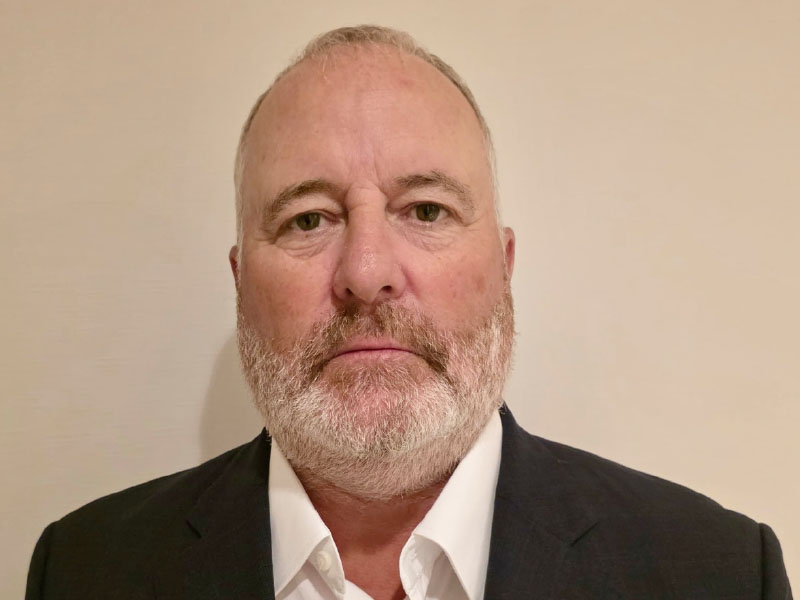
Jeff Thompson CEO & Chairman
www.redcat.red
“our goal is to develop specialized systems that can operate together as part of a coordinated architecture”