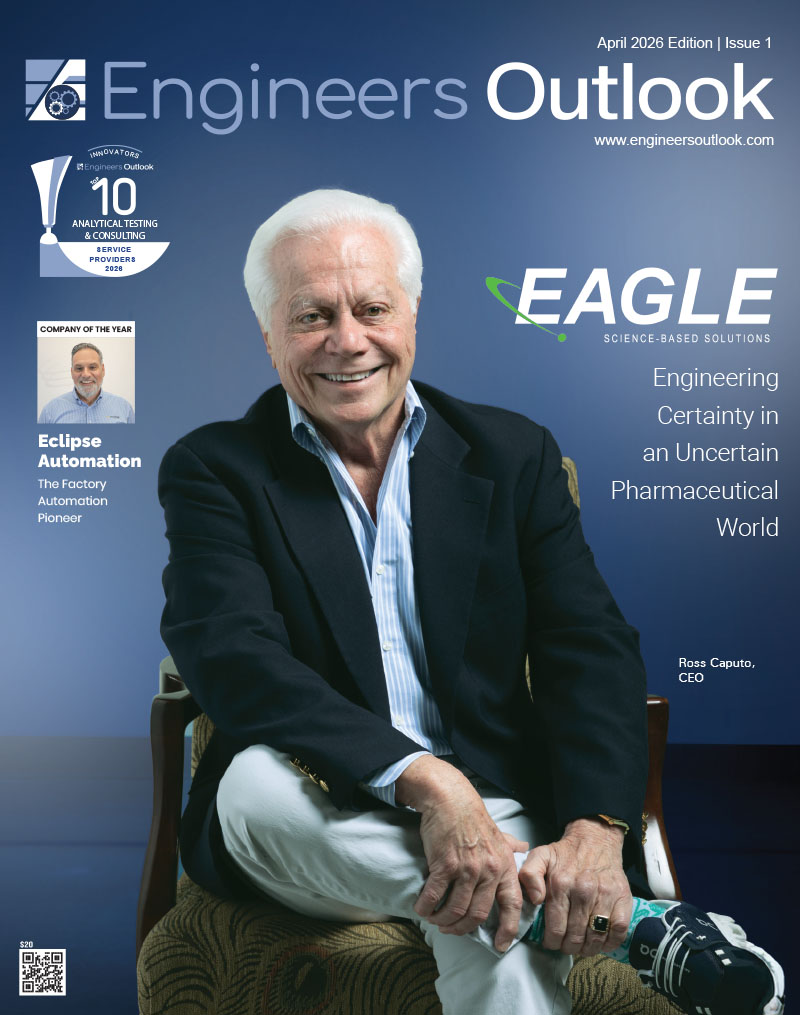
Eagle Analytical Services: Engineering Certainty in an Uncertain Pharmaceutical World
The pharmaceutical and life sciences industry rarely fails loudly. Instead, risk accumulates quietly—through a misunderstood regulation, an overlooked airflow imbalance, or a testing method applied without full scientific context. As personalized medicine, compounding pharmacies, and telehealth-driven care models accelerate, the margin for error continues to shrink. Regulators expect more. Patients depend on more. And the consequences of getting it wrong are no longer confined to compliance notices—they can halt operations, damage reputations, and put lives at risk. Eagle Analytical Services exists to prevent those failures before they occur. More than a laboratory or consulting firm, Eagle operates as a deeply integrated scientific, engineering, and compliance partner to pharmaceutical manufacturers, compounding pharmacies, and healthcare innovators navigating an increasingly complex regulatory environment.
At the core of Eagle’s identity is a philosophy that resists shortcuts. The company’s approach is not built around speed or cost optimization at the expense of rigor. Instead, Eagle anchors every recommendation in scientific validity and regulatory defensibility. As Chief Executive Officer Ross Caputo puts it, “We will never, ever do something that is not scientifically valid.” That conviction shapes how Eagle engages with clients who are often under pressure to move faster or cheaper. When asked whether certain requirements can be bypassed, Eagle’s answer is consistent: if it is scientifically necessary, it must be done. This commitment is summed up in Eagle’s guiding principle—compliance through science. It is a stance that may be uncompromising, but one that ultimately protects patients, businesses, and the integrity of the pharmaceutical ecosystem.
Experience That Extends Beyond the Classroom
Eagle’s strength lies not only in academic expertise but in lived industry experience. The organization is staffed by engineers, microbiologists, chemists, and pharmaceutical veterans who have operated inside regulated environments, responded to FDA inspections, and managed the realities of manufacturing under pressure. “We know where the pitfalls are,” Caputo explains. “The devil’s in the details. We call those footnotes—and that’s where most people get into trouble.”
That depth of experience allows Eagle to translate regulatory expectations into operational reality. Clients are not simply told what the rules are; they are shown how those rules apply to their specific products, facilities, and workflows. In fact, Eagle’s differentiation becomes most evident in its scope. The company offers microbiological and chemistry testing, environmental monitoring, container closure integrity testing, radioisotope testing, and advanced analytical services. But it goes further—vertically integrating engineering, facility design, calibration, validation, qualification, consulting, and training. This integration enables Eagle to operate holistically. A failed environmental monitoring result, for instance, is not treated as a lab issue alone. It triggers an investigation into airflow design, pressure differentials, filtration systems, facility layout, and human processes. Eagle follows the data wherever it leads. As Caputo notes, “We don’t look at testing in isolation. We look at the entire system—from raw materials coming in to how product leaves the building.”
Engineering as a Pillar of Risk Mitigation
Engineering is not an auxiliary function at Eagle—it is foundational. Cleanrooms, HVAC systems, pressure controls, and airflow patterns are treated as living systems that must be continuously validated and maintained. Eagle’s engineering teams design facilities from the ground up, conduct gap analyses on existing operations, and provide ongoing calibration and validation to ensure long-term control. This capability is especially critical for compounding pharmacies, where short shelf lives leave no room for delays. Caputo captures the reality succinctly: “A GMP manufacturer can wait six months. A pharmacy can’t. Their product expired three months ago.”
The pace of pharmaceutical innovation continues to accelerate, particularly in areas such as small peptides, complex biologics, and personalized therapies. Eagle responds by investing early in emerging methodologies and technologies rather than reacting after regulations change. One example is Eagle’s early adoption of recombinant DNA–based endotoxin testing, which required new equipment, workflows, and expertise. The company prepared for this addition well before it became widely adopted, positioning itself among a small group of laboratories capable of delivering the method at scale. “We were ready a year before it arrived,” Ross says. “Because we knew it was coming.” This proactive mindset extends to peptide mapping, stability-indicating assays, and advanced molecular characterization—areas where precision directly impacts patient safety.
Education as a Strategic Advantage
Many of Eagle’s clients are skilled professionals but not trained scientists. Bridging that gap is a central part of Eagle’s value. The company places strong emphasis on education, translating complex scientific and regulatory concepts into practical, understandable guidance. As Lisa Johnson, the company’s Vice President of Marketing and Business Development, explains, “A lot of our clients went to school to be pharmacists, not scientists. Explaining the science behind it in a way that actually clicks is something we do really well.” This approach reduces repeat issues, strengthens internal decision-making, and builds trust over time. Eagle positions itself not as a transactional service provider, but as a long-term partner invested in its clients’ success.
Proactive Intervention When It Matters Most
Eagle’s partnership philosophy becomes most visible during moments of crisis. When clients receive FDA Form 483 observations or experience serious compliance risks, Eagle deploys multidisciplinary teams to assess facilities, systems, documentation, and processes. These interventions often reveal that the true risk lies not in a single failed test, but in systemic issues—misaligned workflows, insufficient monitoring, or infrastructure incapable of maintaining control. Eagle’s ability to address these challenges end-to-end has helped clients protect significant financial investments and restore regulatory confidence.
Technology underpins much of Eagle’s effectiveness. Eagle Tracks, the company’s proprietary tracking and data platform, provides real-time visibility into every sample’s journey through the laboratory. Beyond transparency, Eagle Tracks enables trend analysis and statistical process control. By monitoring patterns in client data, Eagle can identify early warning signs before failures occur—and intervene proactively. “We don’t wait for things to break,” Caputo explains. “If we see a trend moving in the wrong direction, we call the client before it becomes a problem.”
On a closer view, Eagle’s most defining trait is integrity. The company refuses to compromise scientific rigor, even when it means losing work. Testing and quality systems, Eagle maintains, are not expenses—they are investments in risk mitigation. As Caputo concludes, “Quality doesn’t cost anything. A recall does.” By combining scientific rigor, engineering depth, regulatory foresight, and a genuine commitment to partnership, Eagle Analytical Services continues to set a standard for how compliance, safety, and operational excellence should coexist—quietly preventing failures long before they make headlines.
Eagle Analytical Services
Ross Caputo, CEO; Lisa Johnson, VP of Marketing & Business Development
www.eagleanalytical.com
“BioAgilytix is not solely about scale—it is about enhancing its ability to deliver value. By integrating new capabilities with existing expertise, the company ensures that clients receive a seamless experience across all phases of development.”