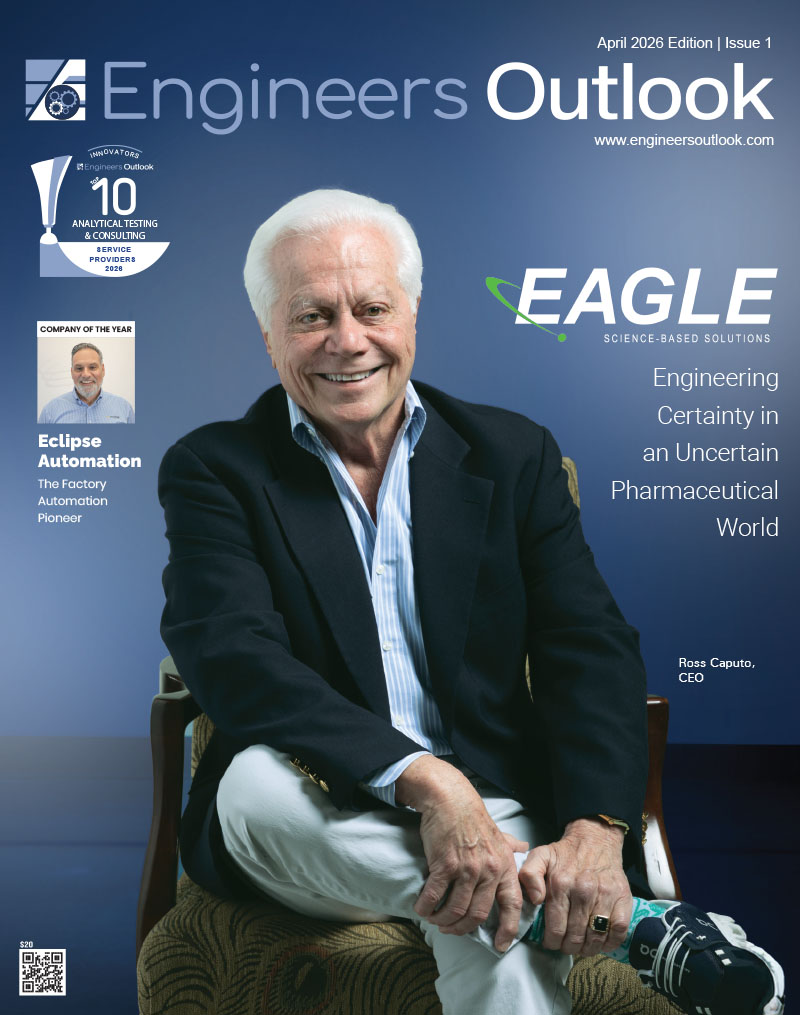
Eclipse Automation: The Factory Automation Pioneer
Eclipse Automation was not built around machines. It was built around outcomes. That distinction has shaped how the company has grown over the past 25 years and why it occupies a distinctive position in the global factory automation landscape today. While many automation firms focus on engineering deliverables or equipment specifications, Eclipse has consistently framed its work around what clients buy: predictable production, regulatory certainty, safety assurance, faster ROI and long-term performance.
Founded in 2001, Eclipse grew through a deliberate commitment to vertical integration at a time when much of the industry was moving in the opposite direction. Rather than outsourcing manufacturing and auxiliary processes, the company chose to retain control over design, build, testing, and execution. This decision was not about scale for its own sake. It was about preserving know-how, accountability, and the ability to de-risk complex projects for customers operating in highly regulated and high-stakes environments with regulatory intelligence embedded into engineering practices.
Early on, Eclipse recognized that vertical integration only creates value if it is managed intelligently. Industries fluctuate, and relying too heavily on a single sector can expose automation providers to severe cyclical risk. What began as an automotive-heavy portfolio was intentionally diversified over time to include consumer products, industrial manufacturing, life sciences medtech, EV, battery and energy-related segments. Through acquisitions and long-term analysis of market behavior, Eclipse learned that industry cycles tend to ripple across a 36-month horizon rather than follow predictable annual patterns. This insight allowed the company to overlap growth curves across multiple sectors, smoothing volatility while maintaining high utilization across its integrated operations. As Eclipse’s CEO Steven Mai puts it, “Our approach is shaped by the environments we serve. In regulated sectors, success is not defined solely by speed. It is defined by defensibility, traceability, and reliability. We therefore embed compliance, documentation, validation, and risk mitigation into the architecture of our solutions rather than treating them as downstream requirements.” Whether navigating FDA regulations, ISO standards, or GMP environments, these requirements are built into system design and project delivery from the outset, reducing risk and accelerating validation.
A key enabler of this model was data. Rather than adopting fragmented ERP and project systems, Eclipse designed and built its own internal ERP platform decades ago, structured around the idea of “last-touch-to-system.” Once information is created, it is never recreated. It flows continuously through engineering, manufacturing, quality, compliance, and delivery. Over time, this discipline removed redundancy, improved accountability, and created a single contextual data foundation that now underpins Eclipse’s digital factory of the future strategy. That foundation has become increasingly valuable as the industry enters what Eclipse leadership describes as a new digital revolution. “Manufacturing today is no longer constrained by mechanical innovation alone. It is shaped by cybersecurity mandates, compliance complexity, sustainability pressures, and the convergence of hardware and software. These forces add operational headwinds while offering little immediate upside unless organizations can harness data in a meaningful way,” points Marc Fuentes, VP of Commercial Growth, Eclipse Automation.
Eclipse’s response is a digital factory of the future mandate that treats data exposure as a value proposition rather than an optional upgrade. The company is now moving toward delivering all factory automation systems SIM-ready – exposed USDs, or universal screen descriptors. This approach allows customers barrier-free access to the data embedded within their capital assets, enabling digital transformation initiatives without costly retrofits or proprietary lock-in. Mai adds, “The machine is secondary. The outcome is what matters.”
This philosophy reframes factory automation from a transactional purchase into a long-term strategic asset. By exposing historical and contextual data, factory leaders gain the ability to optimize operations, integrate analytics, and future-proof their investments. Eclipse believes that in the coming decade, products that cannot expose their own operational history and context will lose value, regardless of how advanced their mechanical design may be. Culture plays a central role in how Eclipse delivers on this vision. The company emphasizes precision, performance, accountability, partnership, and momentum, but these values are not slogans. They are practiced internally before being offered to clients. Eclipse invests heavily in its own digital transformation, and workforce development, reinforcing credibility with customers who are facing similar challenges. As Fuentes explains, “We don’t ask for business. We earn it.”
Geographically, Eclipse has evolved to meet customers where they operate. What began as a regional organization expanded into the United States, Europe, and Asia, creating a global bench of engineering and operational expertise. This proximity enables faster collaboration, deeper market understanding, and consistent execution across regions. At the same time, the company is selective about expansion, focusing on strengthening capabilities in existing regions rather than chasing footprint growth for its own sake.
Over the next several years, factories will become less static and more adaptive. The team expect to see broader use of digital twins in operational decision-making, increased use of predictive systems, modular systems, and greater integration between physical systems and data platforms. At the same time, cybersecurity, system resilience, and governance will become executive-level concerns rather than technical footnotes. Eclipse is preparing by investing in talent, architecture, and delivery models that support this evolution responsibly.
To further accelerate time-to-market outcome for customers, Eclipse is investing heavily in modular, scalable automation. The Aurora Platform™ Series uses a “Crawl, Walk, Run” framework, utilizing a standardized automation platform that is already 50–60 percent engineered. With the Aurora Platform™ Series, Eclipse can dramatically shorten deployment timelines while maintaining flexibility. The Aurora™ Platform Series is being developed within advanced digital environments such as NVIDIA’s Omniverse, allowing rapid iteration, simulation, and validation before physical build. As factory automation converges with robotics, AI, and advanced computing, no single organization can innovate in isolation. In addition to developing its central nervous system Neuron, Eclipse is actively forming alliances with technology providers in areas such as digital platforms, humanoids and vision systems enabling deeper collaboration and faster integration of emerging capabilities. After 25 years in business and more than three decades of leadership experience in factory automation, Mai describes this moment as one of the most exciting of his career. Digital tools are finally mature enough to remove mundane tasks from engineering roles, allowing people to focus on creativity, problem-solving, and value creation. “An engineer becomes an engineer to create,” he notes. “Not to draw.”
Eclipse Automation
Steven Mai, CEO; Marc Fuentes, VP Commercial Growth
www.eclipseautomation.com
“The machine is actually secondary. The outcome is what matters.”