




Over the past two decades, offshore wind has evolved from a niche technology into a central pillar of the global energy transition. Turbines have grown dramatically, projects have moved further offshore, and developers have learned …
0
Over the past two decades, offshore wind has evolved from a niche technology into a central pillar of the global energy transition. Turbines have grown dramatically, projects have moved further offshore, and developers have learned to deliver in increasingly challenging environments. The industry’s next breakthrough, however, will not come from scale alone. It will come from turning technological progress into repeatable, reliable delivery.
Today, rising costs and interest rates, supply-chain constraints, competition for vessels and manufacturing capacity, and pressure on project economics are forcing the sector to focus as much on efficient delivery as on innovation.
As offshore wind enters its next phase of growth, standardisation must become a strategic priority. Not as an alternative to innovation, but as the foundation for deploying innovation reliably at scale.
A More Mature Industry Faces New Priorities
The offshore wind industry has historically been characterised by rapid technological development. Larger turbines have enabled projects to generate more electricity while reducing the number of installed units, helping improve overall economics.
That trend has delivered significant value. Yet each new turbine generation adds complexity across the value chain.
Changes in turbine dimensions and specifications ripple through the entire delivery system: manufacturing facilities, port infrastructure, installation methods, logistics planning and offshore operations. Suppliers must reconfigure production, vessel owners must reassess asset suitability, and developers must manage new technical interfaces each of which can add cost, time and risk.
From a developer’s perspective, a technology proves its value only when it can be manufactured, transported, installed and operated reliably at commercial scale. Technical performance matters, but so do repeatability, interface management and confidence across the full project lifecycle.
The Value of Mature Technology Platforms
The automotive and aviation industries continue to innovate, but they do so through mature platforms that are refined over time. Repeated design, manufacturing and operational experience improves reliability and enables production at scale. Offshore wind has often followed a different pattern, introducing successive turbine generations within relatively short timeframes and requiring the surrounding infrastructure to adapt each time.
Stable platforms allow manufacturers to improve production efficiency, suppliers to invest with greater confidence and project developers to draw on a larger body of operational experience. They also provide investors and lenders with a clearer understanding of performance expectations and technical risk.
Supporting Long-Term Supply Chain Investment
The sector relies on specialised manufacturers, foundation suppliers, ports, vessel operators, installation contractors and service providers whose capital decisions often span decades.
Ports cannot be redesigned for every new component dimension, vessel owners cannot renew fleets every few years, and suppliers cannot expand capacity without confidence that demand will endure. The industry needs enough technical stability for infrastructure and capability investments to pay back over realistic time horizons.
Greater alignment on technical standards and longer platform lifecycles would support investment, increase capacity, reduce bottlenecks and improve delivery certainty.
Industry and policymakers increasingly recognise that scaling offshore wind requires an industrialised supply chain operating efficiently across markets.
Operational Benefits Beyond Construction
As portfolios grow, standardised turbine fleets can simplify maintenance, spare-parts management and technician training, while allowing operational experience to transfer more effectively between projects.
These less visible benefits can materially improve long-term performance and operating costs for assets expected to run for decades.
Improving Predictability for Investors
Offshore wind projects require substantial upfront investment, and investors place a premium on predictable technology, delivery strategies and supply-chain maturity.
Standardisation builds confidence through proven technology, established processes and familiar delivery models, supporting better decisions on cost, schedule and operational performance.
With financing costs increasingly shaping project economics, that predictability has tangible value.
Balancing Innovation and Industrialisation
Innovation and standardisation are complementary. Offshore wind will continue to benefit from advances in digitalisation, materials, installation techniques, turbine design and operations. The task is to channel those advances into technologies and processes that can be repeated, improved and deployed efficiently across projects and markets.
The opportunity lies in finding the right balance between technological progress and industrial efficiency.
Not every improvement requires a completely new platform. In some cases, greater value can be created by refining, optimising and scaling technologies that have already demonstrated their capabilities in the field.
Looking Ahead
The coming decade will be defined by the industry’s ability to deliver offshore wind at unprecedented scale. That is not only a climate challenge; it is also an industrial and energy-security imperative. Europe needs an offshore wind sector capable of delivering dependable volumes, resilient supply chains and internationally competitive projects.
As offshore wind matures, success will depend not only on what the industry can build, but on what it can deliver repeatedly, reliably and at scale. Standardisation is how offshore wind turns ambition into industrial capability.
About the author
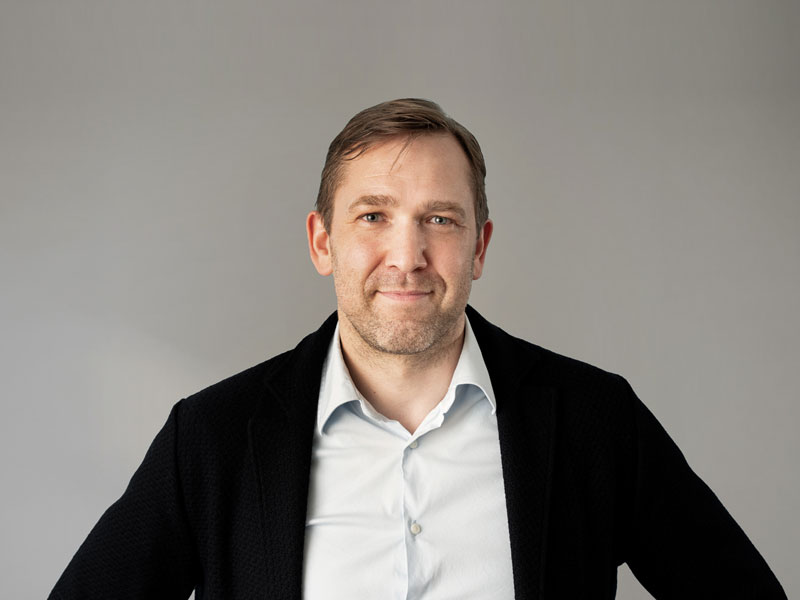
Adam Thomsen is Chief Development Officer of Skyborn Renewables, an accomplished offshore wind infrastructure platform. With more than 25 years of experience in renewable energy, he has worked across the development, delivery and operation of large-scale offshore wind projects in international markets.