




Table of Contents 1. Beyond the Prototype: Where Lies the Biggest Opportunity Over the Next 5–10 Years?2. Hype vs. Reality: Breaking Down the Barriers and Misconceptions3. What Traditional Manufacturers Must UnderstandThe Power of Community: Driving …
0
Table of Contents
Additive Manufacturing (AM) is no longer confined to prototype labs and engineering exhibitions. Across UK manufacturing, it is quietly becoming a practical tool for reducing lead times, localising production, and solving real-world supply chain problems.
But as the technology evolves, so too must the industry’s mindset. Innovation does not happen in a vacuum, and as Harvey Leach, Director at Vercity (Oxford) observes from an industry-adjacent perspective: “The biggest opportunity is staying ahead of growing market expectations as machine speeds, surface finish, and material options expand. The technology will continue to offer more than most of the market is currently aware of.”
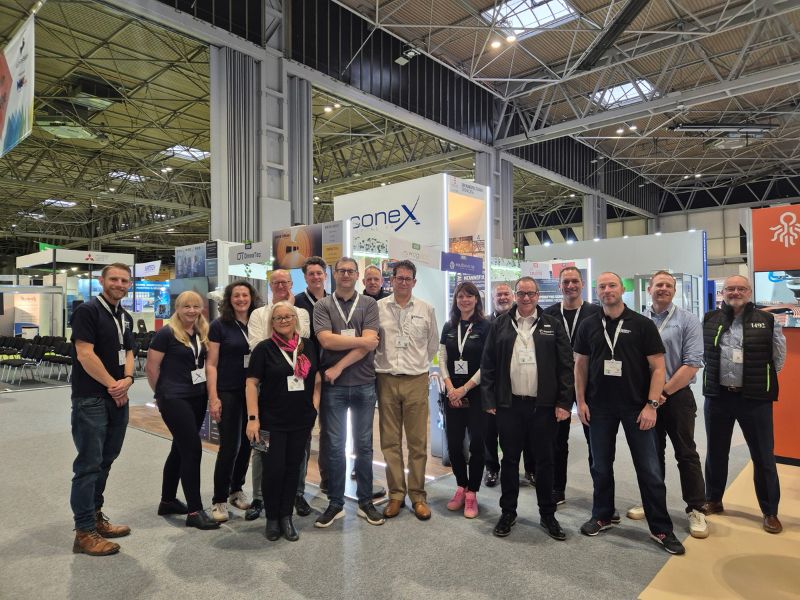
To understand where the sector is heading, we brought together a roundtable of industry leaders from across the ConeX community to share their insights and expertise. What emerges is not a story of one technology replacing another, but of an ecosystem discovering how to blend the old with the new.
1. Beyond the Prototype: Where Lies the Biggest Opportunity Over the Next 5–10 Years?
The consensus among our community is clear: the next decade isn’t about simply printing more things; it’s about a fundamental shift in supply chains, localisation, and production tooling.
“The biggest opportunity isn’t more printers, it’s a complete shift in how supply chains operate,” argues Neil Sewell, Director at TriMech Manufacturing. “We’re moving from shipping parts to shipping files, printing what we need, where we need it, when we need it. This shift toward digital inventory and distributed manufacturing has the potential to fundamentally change how products are designed, stored, and delivered.”
Crucially, the hardware enabling this agility is now filtering down to workshop level. Ben Chadwick of Bowman 3Dnotes a massive shift happening right now. “There is an ongoing revival in the traditional filament printing space with cheap, high-performance machines enabling companies to run reliable machines in-house without a big outlay, opening up the opportunity for high-performance ‘print farms’.”
Meanwhile, at the heavy-duty end of the spectrum, Oliver Coleman of Rapid Fusion sees a massive financial frontier in Large-Format Additive Manufacturing (LFAM) for industrial tooling. “Industries that have traditionally spent weeks and significant capital producing moulds, jigs, and layup tools from metal can now print high-performance composite tooling in hours. That kind of change in lead time and cost moves this technology from ‘interesting’ to essential.”
2. Hype vs. Reality: Breaking Down the Barriers and Misconceptions
Despite these technical breakthroughs, wider market adoption is still limited by outdated perceptions, exaggerated marketing, and artificial industry gatekeeping.
“The AM printing industry itself is guilty of far too much hype, leading to bad experiences,” warns Rob Johnson of 76 Additive. “There have been far too many wild claims, and far too much focus on the technology rather than reliability, repeatability, and metrics that more mature manufacturing processes possess.”
A primary barrier is the lingering myth that professional 3D printing is an all-or-nothing, high-cost gamble. Oliver Landau Williams of Printotype calls out these legacy barriers to entry: “There is deliberate misdirection by some legacy parties making it sound like you cannot work in a professional sense without an asset cost of £50,000+. That is not the case. You are completely able to utilise 3D printing within your workflow on a machine that costs a tenth of that.”
Furthermore, businesses must learn to separate hobbyist experiences from true industrial systems. Matt White of OGLE Models and Prototypes points out: “There is still a tendency to associate industrial AM with hobby-level printing. Successful AM relies heavily on engineering knowledge, orientation, tolerances, and post-processing expertise. It isn’t simply a case of ‘press print and get a finished part’.”
3. What Traditional Manufacturers Must Understand
If there is one lesson the ConeX community wants to impart to traditional manufacturers, it is this: Additive manufacturing is a teammate, not an adversary.
“Traditional manufacturers should see additive manufacturing as an opportunity rather than a threat,” emphasises Gill Rice of JKL Mouldings. “Each process has its strengths. Injection moulding remains the most cost-effective solution for high-volume production, while AM offers advantages in speed and complex geometry. The most successful manufacturers will be those who understand how to apply the right process to the right project, rather than viewing technologies in isolation.”
To unlock that value, however, engineers must design specifically for the process. Rich Taylor of Mouse Designpoints out that Design for Additive Manufacturing (DfAM) is a highly specialised skill: “A product designed for 3D printing is not the same as a product designed for injection moulding. You need to understand when to use it, and when the product may need to be redesigned for a different production route later on.”
Dom Urry of RAD Additive highlights immediate, practical wins for those who embrace it alongside current setups: “Applications such as jigs and fixtures can reduce setup times, improve repeatability, and support operator training by standardising processes. Rather than replacing traditional methods, AM works most effectively alongside them, providing a flexible approach to improving efficiency today.”
The Power of Community: Driving the SME Sector Forward
How do we bridge the gap between traditional heritage and advanced manufacturing? The answer doesn’t lie in multi-million-pound corporate R&D budgets; it lies in the power of community connection and peer-to-peer collaboration.
Borrowing a concept from the tech world, Oliver Landau Williams (Printotype) perfectly encapsulates the current paradigm shift: “AM is not coming to take your job, but the traditional manufacturer now using additive manufacturing probably will.”
For Small and Medium Enterprises (SMEs), navigating this evolution alone can be daunting. The rapid pace of change means that what was true two years ago may be completely outdated today. As Matt White (OGLE) rightly highlights: “the real commercial value often extends far beyond the printed piece itself, it’s about the overall reduction in product development cost, speed of learning, and total assembly efficiency.”
This is precisely why collaborative ecosystems like the ConeX community are vital to the future of UK manufacturing. By bringing together design agencies, tooling experts, injection moulders, and additive specialists, SMEs can pool their collective knowledge, demystify the technology, and run low-risk pilot projects.
When independent businesses collaborate, they combine the deep, historical expertise of traditional manufacturing with the fast, disruptive agility of advanced tech. By sharing knowledge, passing on expertise, and building integrated networks, the SME sector won’t just survive changing global tides… It will lead them.
Connect With the Experts
This thought leadership feature was compiled through our ConeX Community, uniting specialist UK manufacturers to build stronger supply chains through active collaboration. Discover more or connect with our contributors directly below:
- Sam Baynham – ConeX Portal: conex-portal.co.uk
- Veracity (Oxford): veracityoxford.com
- 76 Additive: 76additive.co.uk
- Bowman 3D: bowman3d.com
- JKL Mouldings: jklmouldings.co.uk
- Mouse Design: mouse.design
- OGLE Models and Prototypes: oglemodels.com
- Printotype: printotype.co.uk
- RAD Additive: radadditive.co.uk
- Rapid Fusion: rapidfusion.co.uk
- TriMech Manufacturing: trimech.com